

Components of dental implants play a crucial role in the function, stability, and long-term success of modern implant dentistry. For patients considering dental implants, understanding how each part works—both individually and together—can make the treatment process clearer and more reassuring. Dental implants are more than just artificial teeth; they are carefully engineered systems designed to replace the root, connection point, and visible crown of a missing tooth with natural-looking precision.
While many patients focus primarily on the final result—the visible crown—the true strength of a dental implant comes from its internal structure. Each component serves a unique purpose, helping the implant integrate with the bone, support chewing forces, and deliver the comfort and appearance of a natural tooth.
In this guide, we will explore the three essential components of dental implants: the implant fixture, the abutment, and the crown. By understanding how these elements work together, patients can make informed decisions and appreciate why implant dentistry remains one of the most effective and durable solutions for tooth replacement.
Whether you’re planning your first implant or simply curious about the process, this article will walk you through everything you need to know—step by step.
Understanding the Components of Dental Implants: A Quick Overview
Before exploring each part in detail, it’s important to understand why the components of dental implants are designed the way they are. Dental implants are not simply artificial teeth placed on top of the gums. Instead, they are advanced restorative systems built to mimic the entire structure of a natural tooth—from the root inside the bone to the visible crown above the gumline.
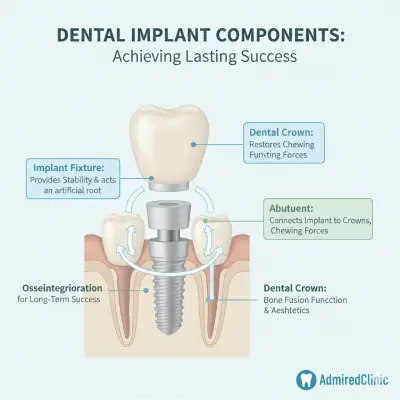
Unlike removable dentures or traditional bridges, dental implants rely on a three-part structure that provides exceptional stability, durability, and comfort. Each component has a specific role, and together they create a restoration that looks, feels, and functions like a real tooth.
The first component is the implant fixture, which acts as the artificial root and integrates directly with the jawbone. The second is the abutment, a connector piece that links the implant fixture to the crown. Finally, the crown is the visible part of the implant that restores chewing function and completes the natural appearance of your smile.
This three-part design is what makes dental implants one of the most effective long-term solutions available today. By understanding the purpose of each component, patients can better appreciate the technology behind their treatment and why precision, quality, and expertise matter at every step.
Component 1: The Implant Fixture — The Foundation of Every Dental Implant
Among all the components of dental implants, the implant fixture is the most essential. Often called the “implant post” or “root implant,” this part is placed directly into the jawbone and serves as the foundation for the entire restoration. Without a strong and stable fixture, the implant cannot support chewing forces or integrate properly with the bone.
The fixture is typically made from titanium or zirconia—materials chosen for their exceptional strength, durability, and biocompatibility. Titanium, in particular, has the unique ability to fuse with bone through a process called osseointegration. This natural bonding process allows the implant to become a permanent part of the jaw, functioning just like a real tooth root.
Shape and surface texture also play an important role. Modern implant fixtures have special grooves, threads, or coatings that enhance bone contact and encourage faster healing. For older adults or patients with reduced bone density, these design improvements greatly increase the chances of long-term success.
Once the fixture is placed, a healing period is required for the bone to fully integrate with the implant. During this time, the fixture remains hidden beneath the gum, but it is silently doing the most important work—establishing a strong, stable base for the abutment and crown.
Understanding the importance of the implant fixture helps patients appreciate why proper planning, bone evaluation, and surgical precision matter. It is the foundation that determines the strength and lifespan of the entire dental implant system.
Component 2: The Abutment — Connecting the Implant to the Restoration
The abutment is the second critical element among the components of dental implants, acting as the connector between the implant fixture and the crown. While the fixture provides stability within the jawbone, the abutment ensures that the visible crown is securely attached, allowing the implant to function like a natural tooth.
Abutments are typically made from titanium, zirconia, or a combination of materials, chosen for their strength and biocompatibility. They are precisely manufactured to fit the implant fixture and the crown perfectly, which is crucial for both functionality and aesthetics. A poorly fitted abutment can lead to complications such as loosening, irritation of the gums, or uneven bite forces.
There are different types of abutments, including standard, custom, and angled abutments. Standard abutments work well for straightforward cases, while custom abutments are shaped to match the patient’s gum line and tooth alignment. Angled abutments are particularly useful for cases where implants must be placed at a slight angle due to bone limitations, ensuring a natural and comfortable final result.
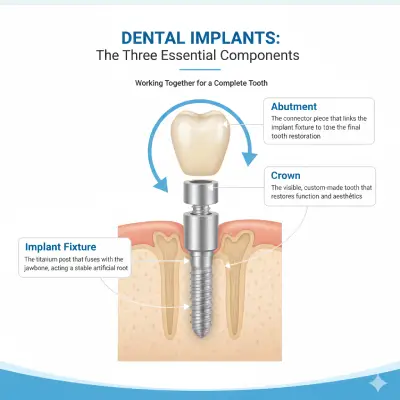
Proper placement and selection of the abutment directly influence the success and longevity of the dental implant. By serving as the critical link between the hidden fixture and the visible crown, the abutment ensures stability, comfort, and a natural appearance. Understanding its role helps patients appreciate the precision and planning required for successful dental implant treatments.
Component 3: The Crown — The Visible Part of Dental Implants
The crown is the third and final part of the components of dental implants and is the portion that is visible above the gum line. While the implant fixture and abutment provide the structural foundation, the crown completes the restoration, restoring function, aesthetics, and confidence in a patient’s smile.
Crowns are typically made from materials such as porcelain, ceramic, or zirconia, which are chosen for their durability, natural appearance, and resistance to wear. The crown is custom-designed to match the color, shape, and size of the surrounding teeth, ensuring a seamless integration with the patient’s natural smile.
The design and placement of the crown are critical. A well-fitted crown distributes bite forces evenly, preventing undue stress on the implant fixture and abutment. Poorly fitted crowns can cause discomfort, uneven wear, and even long-term complications for the implant system.
Modern dental technology allows for precise measurements and digital scanning to create crowns that fit perfectly, reducing adjustments and ensuring comfort. In some cases, crowns are screw-retained, while others are cemented to the abutment, depending on the clinical requirements and patient preference.
Understanding the crown’s role highlights why components of dental implants must work in harmony. While often the most visible part of the implant, the crown’s effectiveness relies on the proper functioning of the fixture and abutment beneath it. Together, these components deliver the durability, functionality, and natural look that make dental implants a superior solution for tooth replacement.
Why the Components of Dental Implants Matter for Long-Term Success
Understanding the components of dental implants is essential for appreciating why these restorations are so successful and long-lasting. Each part—the fixture, abutment, and crown—plays a unique role in ensuring stability, functionality, and aesthetic appeal. When all components are designed, selected, and placed correctly, the result is a dental implant that can last decades with proper care.
The implant fixture provides a secure foundation in the jawbone, allowing for natural chewing forces without causing damage. The abutment acts as a precise connector, ensuring the crown fits securely and functions comfortably. Finally, the crown restores the appearance and usability of the tooth, making the smile both beautiful and functional. If any of these components fail or are not properly aligned, it can compromise the entire implant, leading to complications or early failure.
Choosing high-quality materials and precise manufacturing techniques for each component is critical. Titanium and zirconia, commonly used for fixtures and abutments, are biocompatible and integrate well with bone and tissue. Porcelain or ceramic crowns provide durability and a natural look. Additionally, advances in digital imaging and CAD/CAM technology allow dental professionals to plan and place implants with unprecedented accuracy.
By understanding the purpose and function of each part, patients can make informed decisions and appreciate the expertise required for a successful procedure. The harmony between the fixture, abutment, and crown is what makes dental implants a superior solution for tooth replacement.
Choosing the Right Dental Implant System at AdmiredClinic in Clacton
A successful dental implant relies not just on one part, but on the precise coordination of all components of dental implants. From the implant fixture that integrates with the jawbone, to the abutment connecting the restoration, and finally the crown that completes your smile, every element must be carefully planned and executed for long-lasting results.
At AdmiredClinic in Clacton, our experienced dental professionals specialize in customizing implant systems for each patient. We assess bone health, oral condition, and aesthetic goals to select the right combination of fixtures, abutments, and crowns. This attention to detail ensures that your dental implants are not only functional but also natural-looking and durable.
If you are considering dental implants and want a treatment that prioritizes safety, precision, and long-term success, the team at AdmiredClinic in Clacton can guide you through every step of the process. Restore your confidence, enjoy a comfortable bite, and achieve a beautiful smile that lasts for years.
